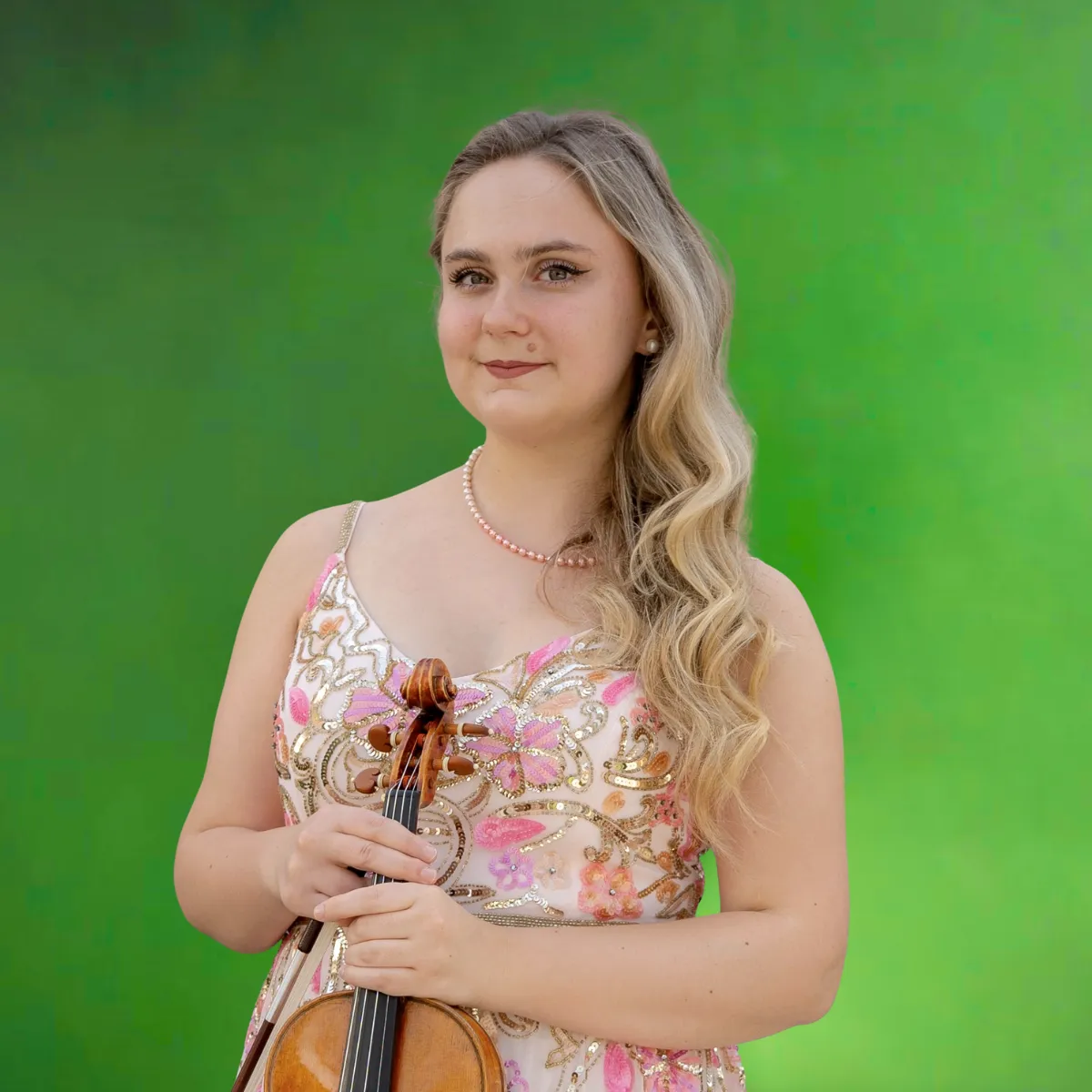
Guest conductor Sameer Patel and local favorite Yvette Kraft leads us into the wild, chilly, and hauntingly beautiful Violin Concerto by Sibelius, music of icy brilliance and soaring lyricism. Beethoven’s Pastoral Symphony completes the journey with birdsong, summer storms, and rustic dances that celebrate the restorative beauty of the countryside.
Sameer Patel, conductor
Yvette Kraft, violin
Piotr Illych Tchaikovsky
Polonaise from Eugene Onegin
Jean Sibelius
Violin Concerto in D minor, Op.47
Ludwig van Beethoven
Symphony No.6 in F major ‘Pastoral’, Op.68
SATURDAY DOORS 6PM | PRECONCERT TALK 6:30PM | SHOW 7:30PM
SUNDAY DOORS 1:30PM | PRECONCERT TALK 2PM | SHOW 3PM
SATURDAY TICKETS
SUNDAY TICKETS
BUY MASTERWORKS SUBSCRIPTION
Free K-12 Tickets
Bring the whole family! This show has free tickets available for all students K-12 through the Spokane Symphony FASTix program.
Get your tickets by calling The Fox box office at 509-624-1200.
Program Notes
Program notes by J. Michael Allsen
Guest conductor Sameer Patel leads the Spokane Symphony in this program of three works. We open with the Polonaise from Tchaikovsky’s opera Eugene Onegin. Then we welcome a local favorite, violinist Yvette Kraft, to play the expressively and technically challenging Violin Concerto by Sibelius. After intermission, we turn to the programmatic Pastoral Symphony of Beethoven, a gentle but thoroughly revolutionary work for its time.
This dignified dance comes from Act III of Tchaikovsky’s operatic masterpiece.
Peter Ilyich Tchaikovsky
Born: May 7, 1840, Votkinsk, Russia.
Died: November 6, 1893, St. Petersburg, Russia.
Polonaise from Eugene Onegin
Composed: 1877-78.
Premiere: May 29, 1879 at the Moscow Conservatory.
Duration: 5:00.
Background
When the singer Elizaveta Lavrovskaya suggested in the spring of 1877 that Tchaikovsky adapt Pushkin’s Eugene Onegin, he initially thought the idea was “wild.” Written nearly fifty years prior, the novel had achieved status as Russia’s definitive masterpiece, beloved by literate society. The story of Tatyana’s tragic love for the worldly Onegin and of his ultimate downfall was so famous that adapting it for the stage was a risky endeavor.
Tchaikovsky ultimately embraced the challenge, beginning composition at the story’s emotional climax: Tatyana’s passionate letter to Onegin, followed by his cool, polite rejection. Just as Tchaikovsky began writing, letters arrived from a former student, Antonina Milyukova, declaring her love. Life and art collided. Terrified of mirroring Onegin’s cruelty, Tchaikovsky relented and agreed to marry her. He poured himself into the score during their five-week engagement, but after a disastrous honeymoon, the opera was shelved as he fled the marriage. He would not finish Onegin until early the following year, after seeking refuge in Clarens, Switzerland.
Tchaikovsky remained cautious about Eugene Onegin even after it was finished, opting to premiere it quietly with students from the Moscow Conservatory. Yet he needn’t have worried. Its professional debut in St. Petersburg a few years later was a resounding success, cementing its place as one of his first works to achieve universal acceptance in Russia.
What You’ll Hear
The famous Polonaise sets the scene for Act III, which opens years after the disastrous duel in which Onegin killed his friend Lensky. As guests dance its stately rhythms in a fashionable St. Petersburg ballroom, the disgraced and remorseful Onegin is stunned to discover that the noble hostess is none other than Tatyana, whom he had cast aside years earlier. His desperate attempts to win her back are rejected by the now-married Tatyana, completing his emotional destruction.
The Violin Concerto of Jean Sibelius is an expansive work that calls for dramatic, forceful playing from the soloist, particularly in the stormy opening movement. It also demands passionate lyricism in the second movement, and astonishing technique in the finale.
Jean Sib...
More at this venue
 Wed, Oct 21, 7:30 PM
Herb Alpert
Concerts & live music · The Fox Theater
 Sat, Oct 24
Dolly Parton’s Threads: My Songs In Symphony
Classical, opera & ballet · The Fox Theater
 Mon, Oct 26
Steven Curtis Chapman
Theatre & musicals · The Fox Theater
 Mon, Oct 26, 7:00 PM
Steven Curtis Chapman
Concerts & live music · The Fox Theater
 Fri, Oct 30
The Goonies
Kids & family · The Fox Theater
 Sat, Oct 31
Black Jacket Symphony Presents: Bon Jovi’s ‘Slippery When Wet’
Classical, opera & ballet · The Fox Theater